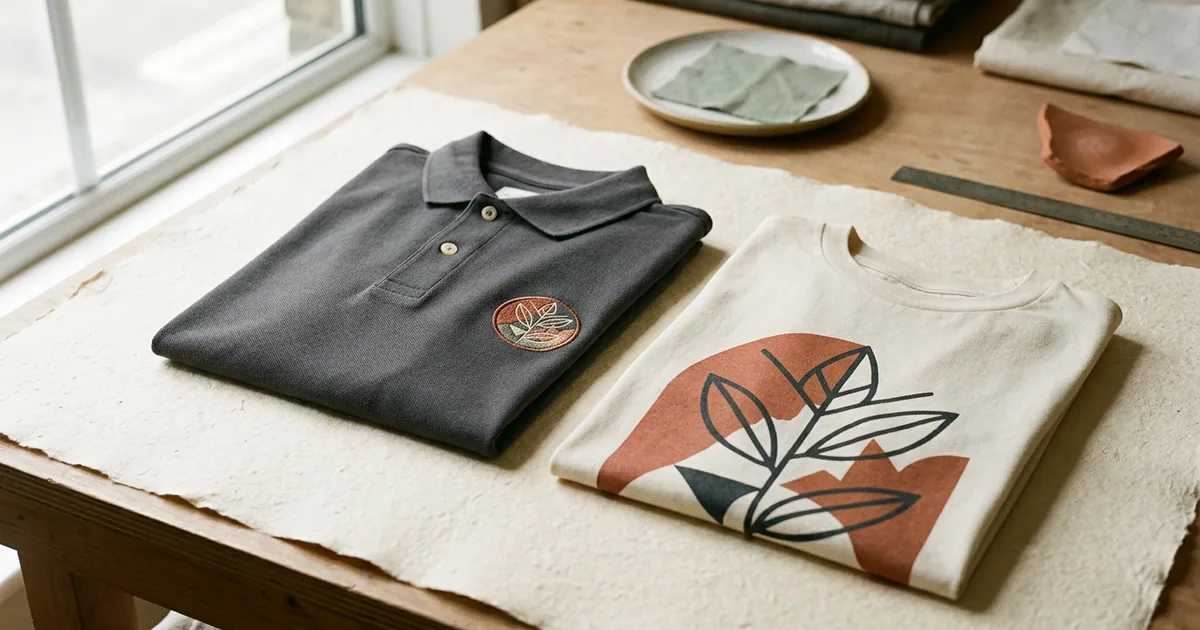
Embroidery is the better choice for small logos on garments that will be washed frequently and worn for years, such as polo shirts, caps and fleeces. Printing is better for larger, more colourful or detailed designs, and works out cheaper for bigger runs or garments that won't be washed as often, such as event t-shirts.
How each method works
Embroidery stitches a design directly into the fabric using coloured thread, building up the logo from a digitised stitch file. Printing applies ink or vinyl to the surface of the garment, using methods such as screen printing (best for larger runs of simple designs), vinyl transfer (good for small runs and single colours) or digital/DTG printing (best for detailed, full-colour designs in smaller quantities).
Durability
This is where embroidery has a clear edge. Stitched thread is part of the fabric structure and survives repeated industrial washing, abrasion and years of daily wear far better than most printed finishes, which is why embroidery is the standard for workwear that gets washed weekly, like chef whites, hi-vis and corporate uniforms. Screen-printed designs can crack or fade after many wash cycles, particularly with lower-quality inks or high-heat tumble drying, though quality screen printing done properly still lasts well for moderate use.
Cost by quantity and design
| Factor | Embroidery | |
|---|---|---|
| Best for design size | Small to medium logos, text | Large graphics, full designs |
| Best for colour count | Few solid colours | Any number, gradients possible |
| Setup cost | Digitising fee, one-off | Screen setup fee for screen print, low for DTG |
| Cost at low volume | Relatively similar to print | Relatively similar to embroidery |
| Cost at high volume | Higher per garment than print | Lower per garment for screen printing |
Look and feel
Embroidery has a raised, textured, tactile finish that reads as more premium and corporate, which is why it's the default for polo shirts and outerwear representing a business to customers. It struggles with very fine detail or gradients, since stitches can only render a design at a certain resolution before small text or thin lines become illegible. Print can reproduce photographic detail, gradients and any number of colours, making it the better option for event merchandise, promotional t-shirts or anything with a busy, colourful design.
Garment considerations
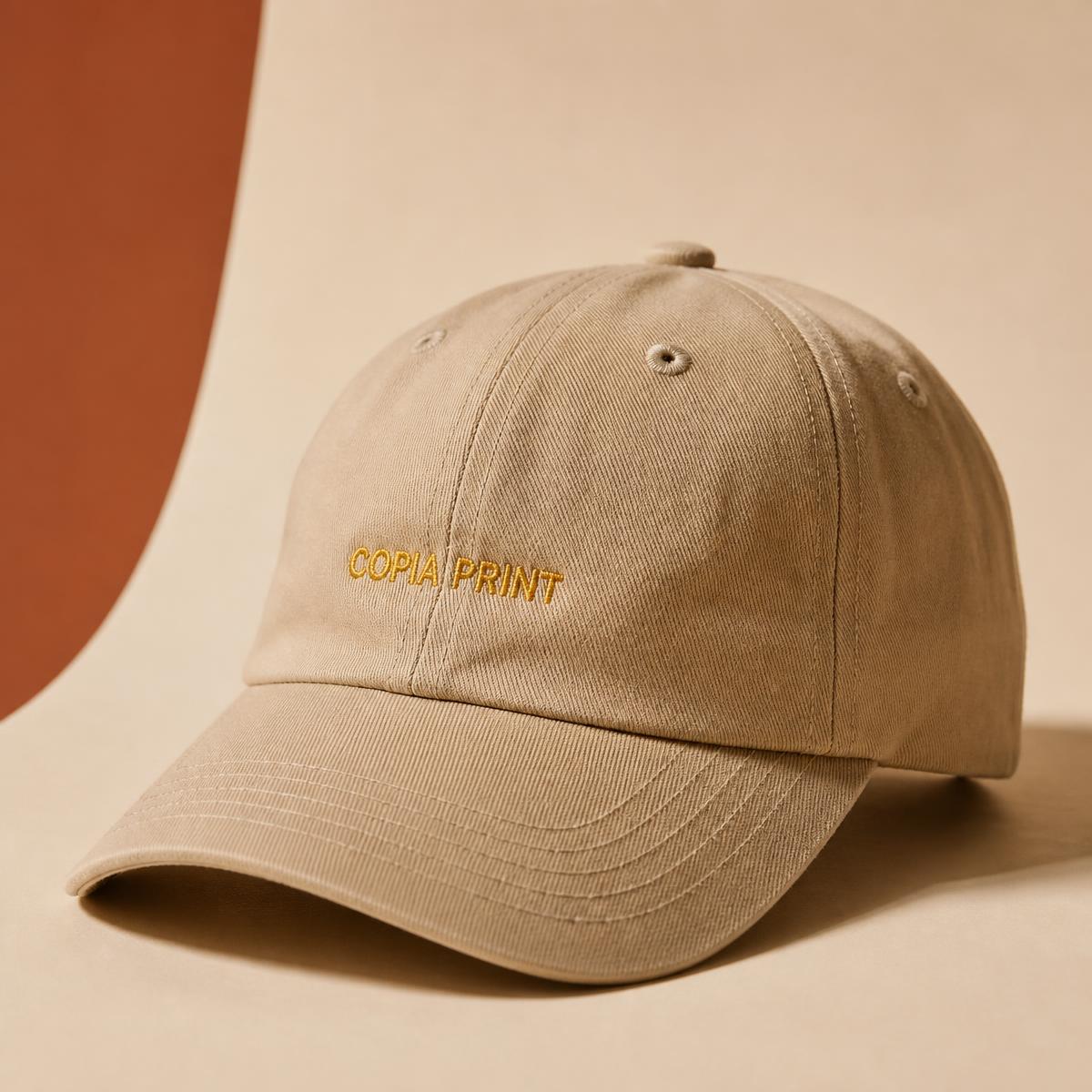
Thicker, more structured garments like polos, jackets and caps hold embroidery well and give the stitching something firm to sit on. Thinner, stretchy fabrics such as performance sportswear can pucker slightly under dense embroidery, so a lighter stitch count or a printed alternative sometimes suits these better. Caps in particular are almost always embroidered rather than printed, since the curved surface and small logo area suit stitching far better than a flat print.
Making the choice
- Choose embroidery for polo shirts, caps, fleeces and any uniform washed regularly and worn long-term.
- Choose print for event t-shirts, promotional wear, or anything with a large, colourful or detailed design.
- For mixed workwear ranges, it's common to embroider outerwear and polos while printing t-shirts and hi-vis, matching the method to how each garment is used.
- If budget is the main constraint and the run is large, screen printing usually comes out cheaper per item than embroidery.
The short version
- Embroidery: durable, premium feel, best for small logos on regularly worn/washed garments.
- Print: better for large, colourful or detailed designs, cheaper at volume.
- Caps and outerwear suit embroidery; event t-shirts suit print.
- Mixing methods across a workwear range is normal and sensible.