
The best paper for a menu depends on how often it's handled: a laminated or heavy coated stock suits menus that are used daily and need to survive spills, while an uncoated or lighter stock suits single-use or seasonal menus printed more frequently.
Why menu paper needs different thinking to other print
Menus are handled repeatedly, sometimes by dozens of customers a day, and are exposed to spilled drinks, food, and general wear far more than a typical leaflet or flyer. Choosing paper purely for looks without considering durability often means reprinting far sooner than expected.
Weight and stiffness
Anything under 250gsm tends to feel flimsy for a menu that's meant to stand up to daily use — most durable menus sit between 300gsm and 400gsm, giving enough rigidity to hold their shape when picked up and read one-handed. Thinner stock (150–200gsm) is fine for disposable, single-visit or promotional inserts that are reprinted often or replaced seasonally.
Coating and lamination options
| Option | Best for | Trade-off |
|---|---|---|
| Uncoated heavy stock | Rustic cafes, short-term menus | Marks and stains more easily |
| Gloss or silk coated | Colour-heavy menus with food photography | Some glare under bright lighting |
| Matt laminated | Daily-use menus, wipeable surface | Slightly higher cost |
| Gloss laminated | Maximum spill resistance, vivid colour | Most reflective under lighting |
Lamination: worth it for most sit-down venues
Laminating a menu adds a plastic film layer that makes it wipeable and far more resistant to spills, grease and general handling. For a menu that stays on the table through multiple sittings a day, lamination usually pays for itself by extending the life of each printed batch considerably compared with an unlaminated sheet. Matt lamination reduces glare under restaurant lighting and has a more premium, less "plasticky" feel than gloss, while gloss lamination gives the strongest visual pop for food photography.
Matching paper to menu style
A fine-dining venue with a menu that changes seasonally might prefer a heavier uncoated or textured stock printed more frequently, since the tactile, paper-like feel suits the positioning and the shorter print life is acceptable. A busy café or takeaway with a fixed, long-running menu is usually better served by a laminated, coated stock that can survive months of daily handling without looking tired.
Format matters too
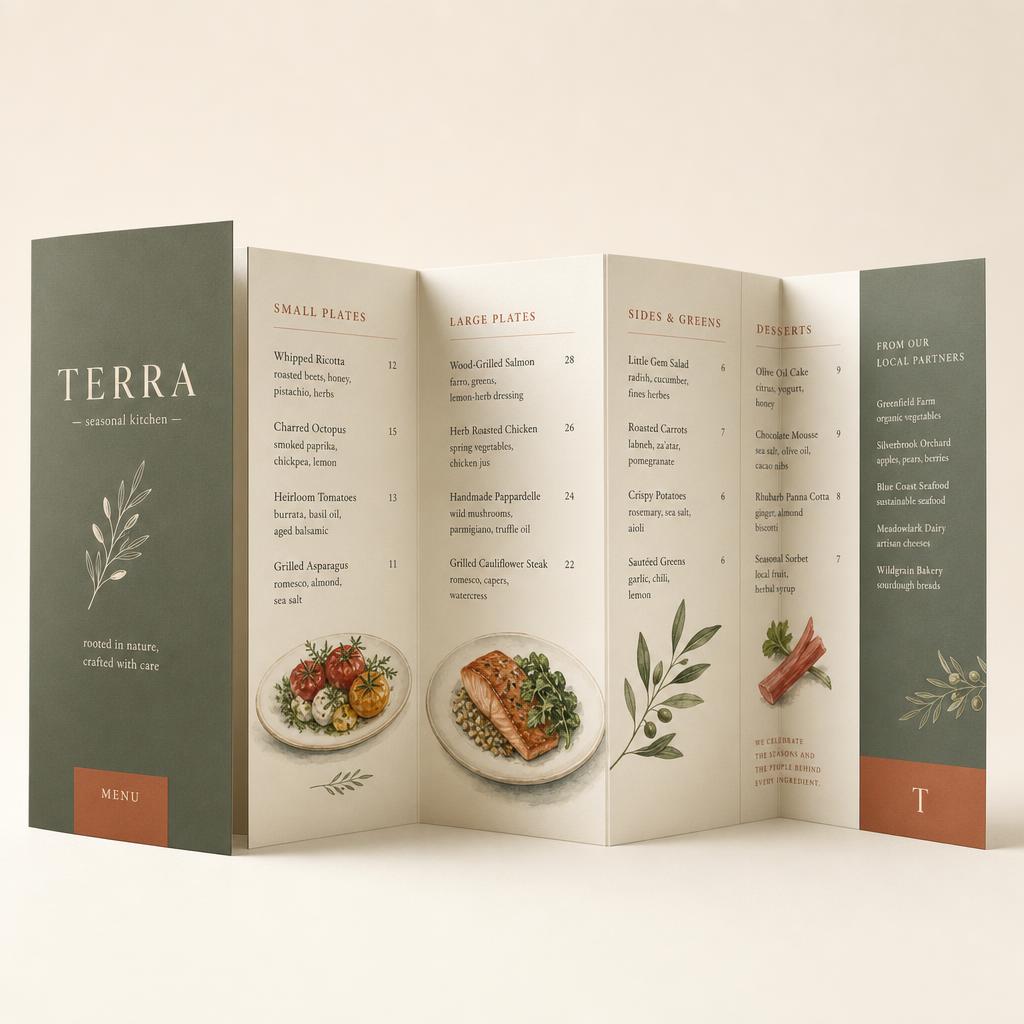
- Folded menus suit venues wanting a compact, structured layout with clear sections
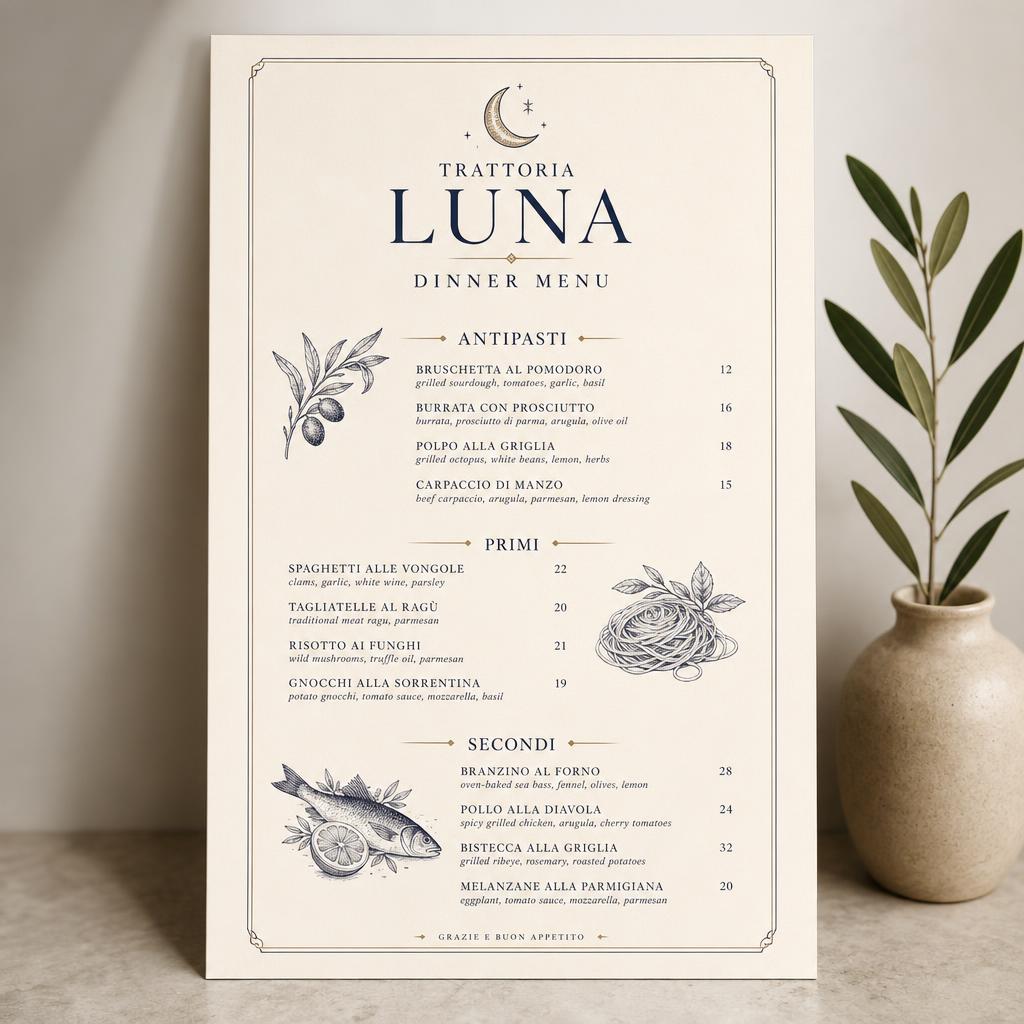
- Single flat sheets work well for concise menus, blackboards-in-print style, or daily specials
- Multi-page booklet-style menus suit larger venues with extensive offerings, often bound or wire-bound for durability
- Consider a smaller companion card for daily specials, printed more frequently than the main menu, to avoid reprinting the whole thing for small changes
Cost versus lifespan
A cheaper, unlaminated menu costs less per unit but may need replacing every few weeks in a busy venue, while a laminated heavier stock costs more upfront but often lasts many months. When comparing menu options, it's worth weighing cost per print against how long each set is expected to remain presentable, not just the upfront price.
The short version
- Use 300–400gsm stock for menus handled daily; lighter stock is fine for short-term or seasonal use
- Lamination adds spill resistance and extends the useful life of a menu significantly
- Matt lamination reduces glare; gloss gives more vivid colour and photo impact
- Match paper choice to how often the menu changes and how heavily it's handled