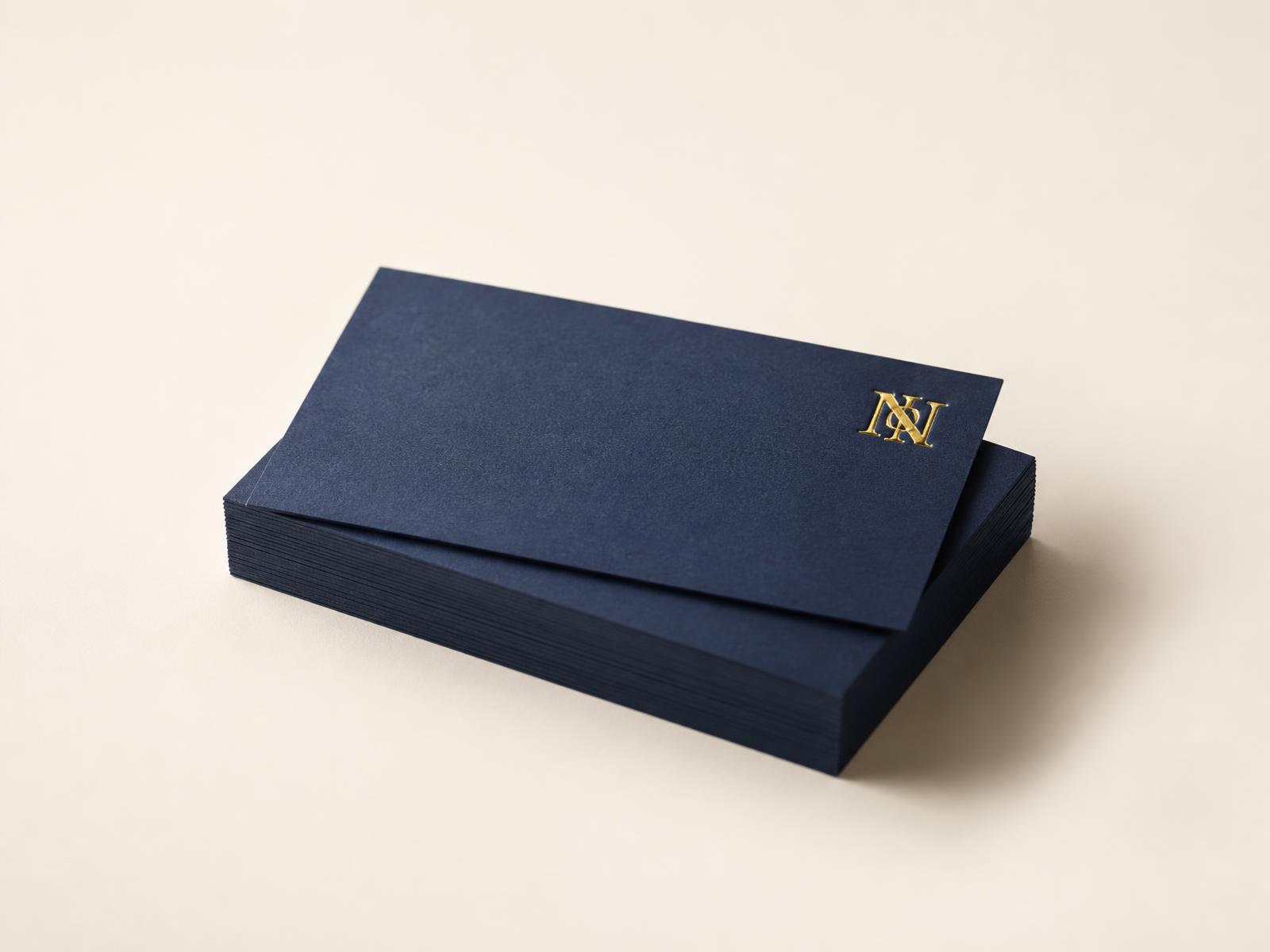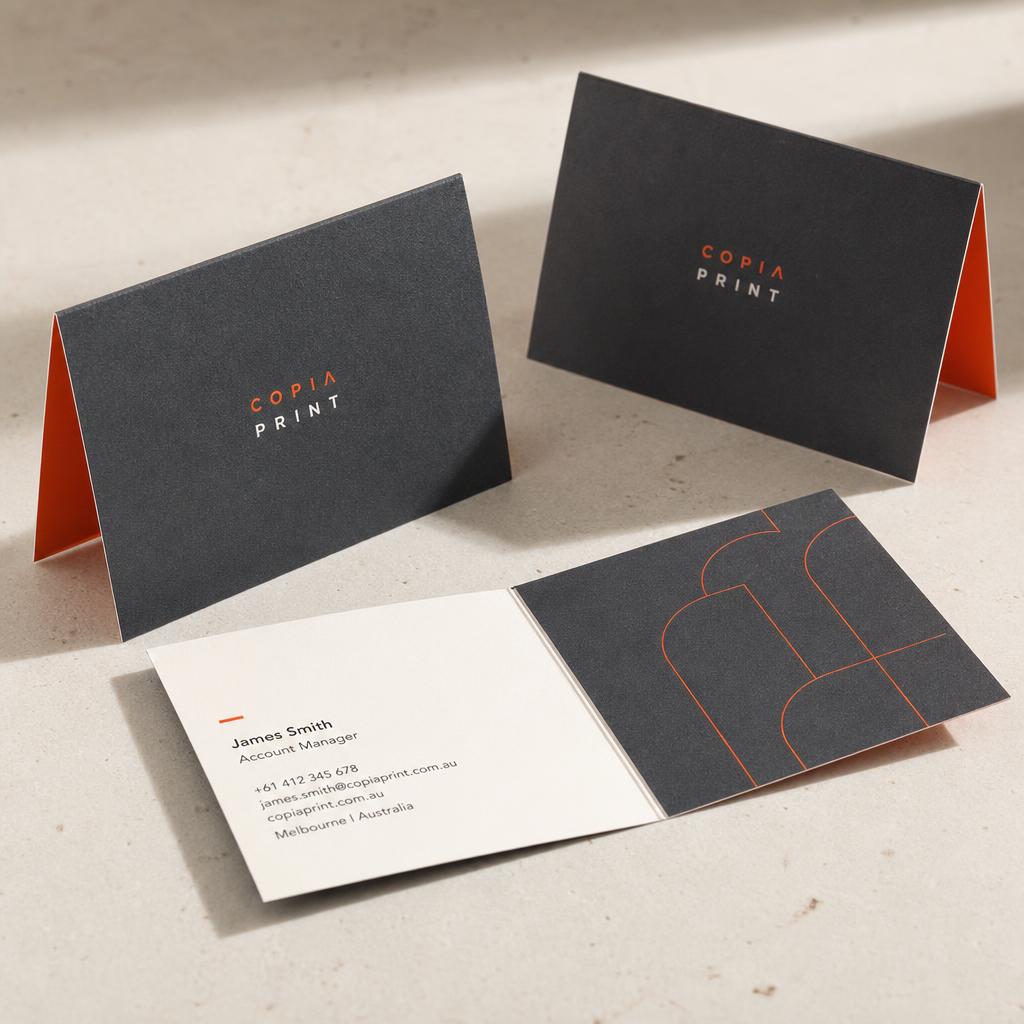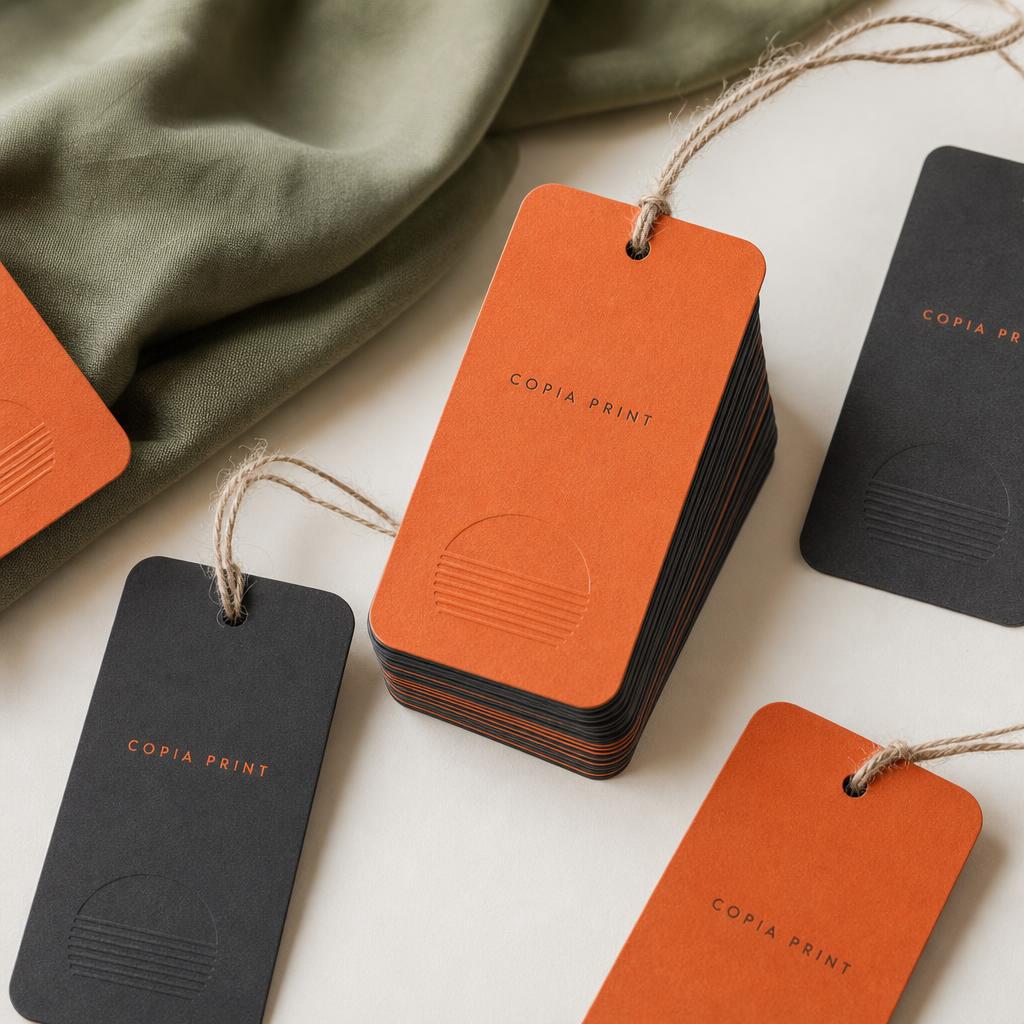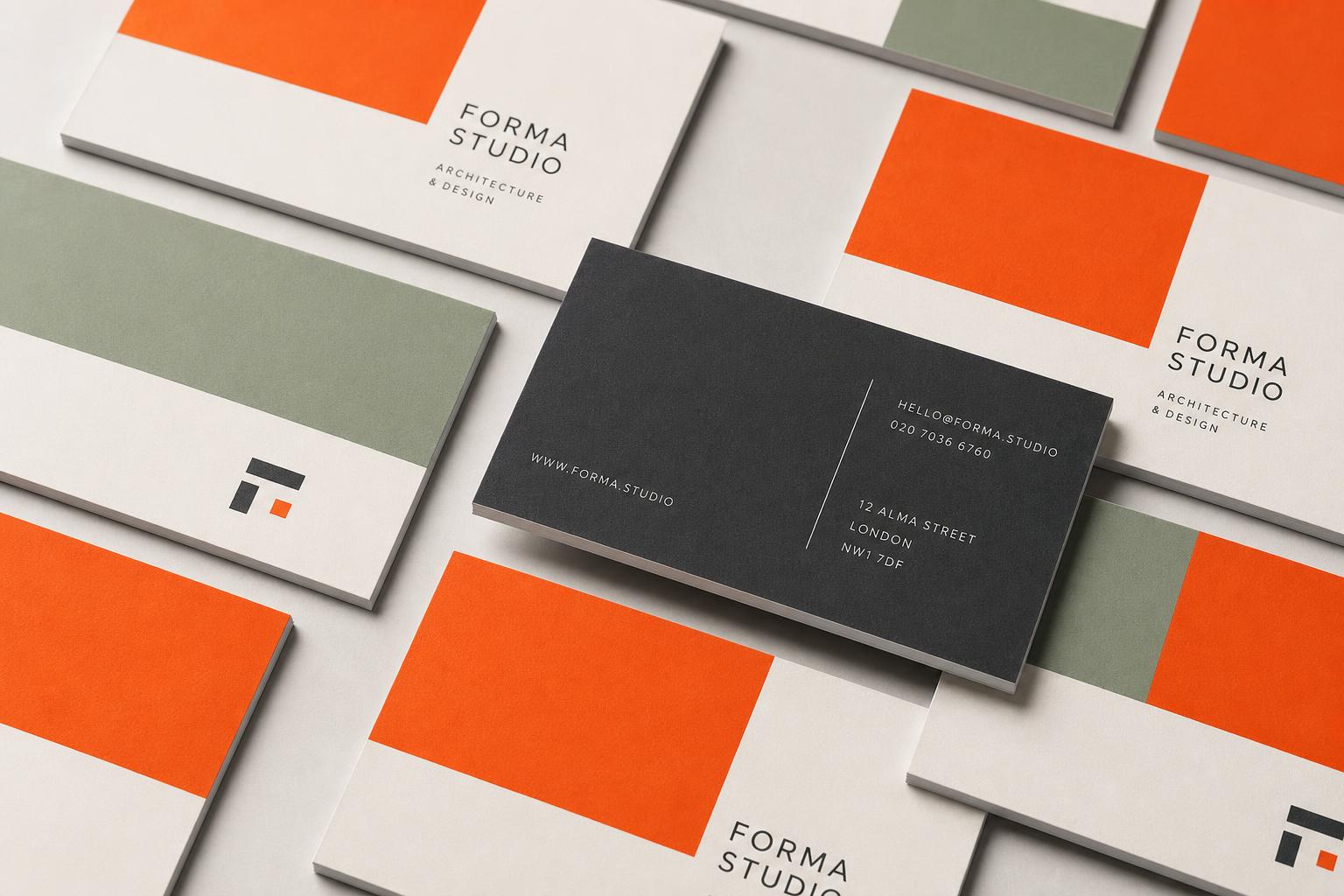

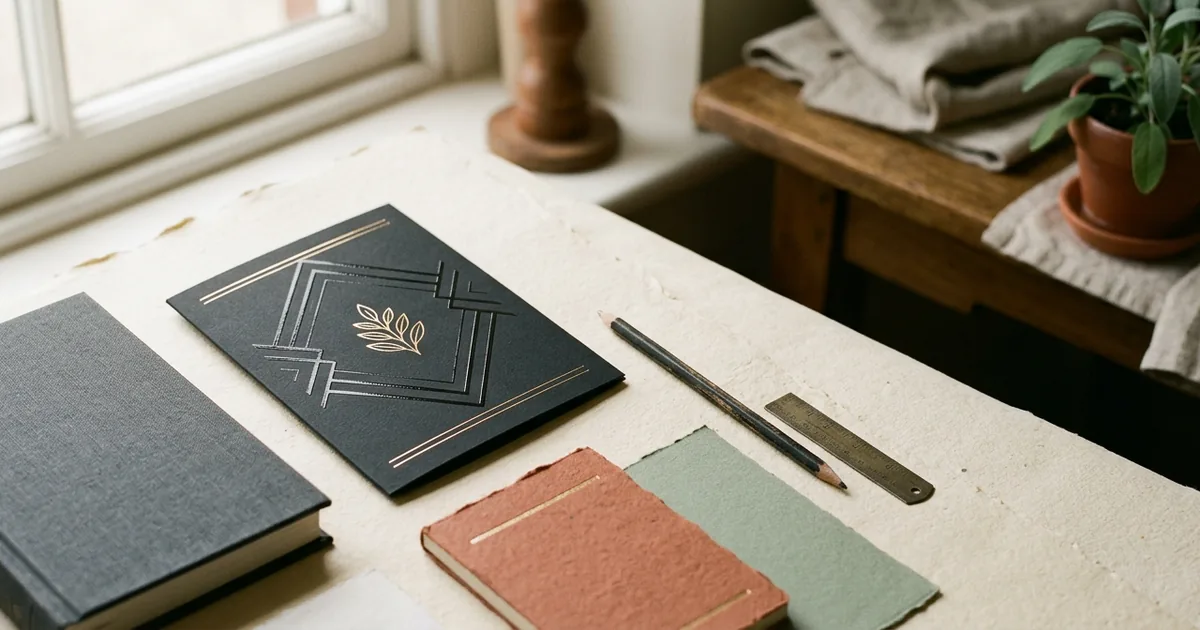
Spot UV adds a raised, glossy varnish to specific areas of a design, while foiling applies a thin layer of metallic or coloured film. Both are finishing touches worth the extra cost when used to highlight a logo, headline or key detail — not across an entire design.
What spot UV actually is
Spot UV is a clear gloss coating cured with ultraviolet light and applied only to chosen parts of a printed sheet, usually over a matt background. The contrast between the flat matt paper and the shiny, slightly raised varnish creates a subtle but effective highlight. It works well on logos, borders, icons, or a single word you want to draw the eye to.
Because it's colourless, spot UV doesn't change the colour of what's underneath — it changes the texture and light reflection. This makes it a good option when you want an understated, premium touch rather than an obvious decorative effect.
What foiling actually is
Foiling transfers a thin metallic or pigmented film onto the paper using heat and pressure (or, for some short-run digital processes, a toner-based transfer). Common foil colours include gold, silver, copper/rose gold, and holographic finishes, though solid colour foils are available too. Unlike spot UV, foil is highly visible and changes the actual colour and reflectivity of the printed area.
Comparing spot UV and foiling
| Feature | Spot UV | Foiling |
|---|---|---|
| Visual effect | Gloss highlight, texture change | Metallic or coloured shine |
| Colour change | None (clear) | Yes — adds a new colour/metallic tone |
| Best background | Matt or uncoated stock | Darker or contrasting stock |
| Typical uses | Logos, subtle accents, borders | Luxury branding, weddings, premium cards |
| Cost impact | Moderate | Generally higher, especially for large areas |
When it's worth the extra cost
Both finishes work best in moderation. A single foiled logo on a business card, or a spot UV highlight around your company name, adds a tactile, premium feel that customers notice when they physically hold the item. Covering an entire card in foil or UV, by contrast, often looks heavier and can reduce legibility, and it costs more without adding proportionate impact.
These finishes make the most commercial sense on items that are handled directly and repeatedly: business cards, folded cards, invitations, and swing tags on retail products, where a tactile detail reinforces perceived quality at the point of contact.
Design considerations
- Keep spot UV or foil areas simple — fine detail and small text can lose crispness
- Foil needs enough contrast with the base paper colour to read clearly
- Spot UV shows up best on matt or silk coated stock, where the sheen contrast is most visible
- Combining both on one design is possible but adds cost and production time — reserve it for standout, premium runs
Is it always worth it?
For everyday flyers or high-volume handouts, the added cost of foiling or spot UV rarely pays back, since the piece is often glanced at rather than held and studied. For business cards, product packaging, swing tags and invitations — items designed to leave an impression — a well-placed foil or UV detail is one of the most cost-effective ways to lift perceived quality.
The short version
- Spot UV adds gloss and texture without changing colour; best on matt stock
- Foiling adds metallic or coloured shine; best with strong background contrast
- Use both sparingly, on key details rather than whole designs
- Best value on cards, tags and invitations that people physically handle